
Part of Micro Myth-busters
How to Prepare for a Website Build (Without Overthinking It)
You do not need a perfect brief before meeting a web developer. Here is what actually helps move a website project forward without the overthinking.
· 5 min read
Quick takeaway
The early stages of a website project are about clarity, not arriving with a 40-page specification document after six straight hours on Reddit reading about DNS settings.
Micro Myth-busters is a short series helping micro and small business owners navigate the often confusing world of websites, hosting, SEO and online visibility.
What Do You Actually Need Before Meeting a Web Developer?
Do you get butterflies at the mere thought of sitting down with someone "technical" and explaining your half-formed ideas?
You are absolutely not alone.
Many small business owners spend weeks — sometimes months — falling down rabbit holes about:
- Domains
- SEO
- Hosting providers
- Plugins
- Website builders
All the while, wondering whether they should have just stayed on Squarespace after all.
Feeling even more overwhelmed than when they started.
The good news is you do not need to arrive at a web development meeting with everything perfectly mapped out.
You don't need:
- A sitemap
- Advanced branding guidelines
- Polished copy
- Exact functionality
- A fully written brief
In reality, a good web developer will help you shape those things through conversation, planning and discovery.
Most projects begin with something much simpler:
"My website doesn't really reflect the business anymore."
"I built this myself a few years ago and now it feels limiting."
"People keep struggling to find information."
"I'm not showing up on Google."
That's enough to start.
You Don't Need All the Answers
At Cahillbrand, we often work with business owners who feel stuck somewhere between DIY website builders and tech jargon.
Many have already spent late nights:
- Rearranging blocks in Wix or Squarespace
- Trying to improve their SEO without really knowing where to begin
- Wrestling with mobile layouts
- Dealing with painfully slow load times
Or managing a website held together by plugins and yesterday's hope...
These frustrations are incredibly common for small businesses and seriously, a website build should not feel like a technical exam you have to cram for the night before.
Our approach is collaborative from the beginning. During the discovery process, we work together to understand:
- Your business goals
- Your audience
- How customers already use your site.
- Where friction currently exists.
Sometimes the issue is design. Sometimes it's structure. In most cases, customers simply cannot find the information they need quickly enough.
Or maybe a business has simply outgrown a DIY solution that once worked perfectly well five years ago!
A good website developer helps uncover those problems before recommending solutions.
What Actually Helps Before Starting a Website Project?
You do not need perfect answers. But there are a few things that genuinely help to move a website project forward.
Before contacting a web developer, it helps to think about:
What your business actually does
Can somebody understand your service within a few seconds of landing on your homepage?
A surprising number of websites try to say everything at once, which usually means visitors absorb none of it.
What currently isn't working
- Are customers struggling to contact you?
- Is your website slow on mobile?
- Have enquiries dropped off?
- Are you embarrassed to send people the link?
- Do contact forms mysteriously stop working every few months?
These are all useful things for a developer to know early on.
Websites you like
Not because we'll copy them, but because they help communicate:
- Visual preferences
- Layout ideas
- Functionality
- The sort of experience you want customers to have.
What actions customers should take
A good website should make those next steps feel obvious.
Existing content or branding
Logos, photographs, service descriptions, social media links and existing website copy all help speed up the process.
Even rough notes scribbled in a Google Doc at 1 am are useful.
What a Good Web Developer Should Help You Figure Out
This is the important part.
A web developer's role is not just to "build pages". It's to help shape a website that works properly for both your business and your users.
That includes:
- Website structure
- User experience (UX)
- Mobile responsiveness
- Technical SEO foundations
- Website hosting
- Page speed
- Accessibility
- Cybersecurity
In our experience, many small business owners focus heavily on homepage design, when the real issue is often:
- Confusing navigation
- Poor mobile usability
- Unclear or lacklustre calls-to-action
- Slow website performance (or trying to make one homepage do the work of five separate pages).
A beautiful website that frustrates users will not perform well long-term.
Likewise, a technically perfect site that feels cold or confusing won't help much either.
Good web development balances scalability, aesthetics, usability and performance together.
When a Detailed Brief Does Help
If you already have:
- Clear branding
- Design mockups
- Customer research
- Booking systems
- Ecommerce plans
- Functionality requirements
- Inspiration websites
…that can absolutely help refine the process.
Some business owners are naturally very visual or detail-oriented. Others have already experimented with WordPress, Shopify or Squarespace themselves before reaching out.
In those cases, examples and early ideas are genuinely useful starting points.
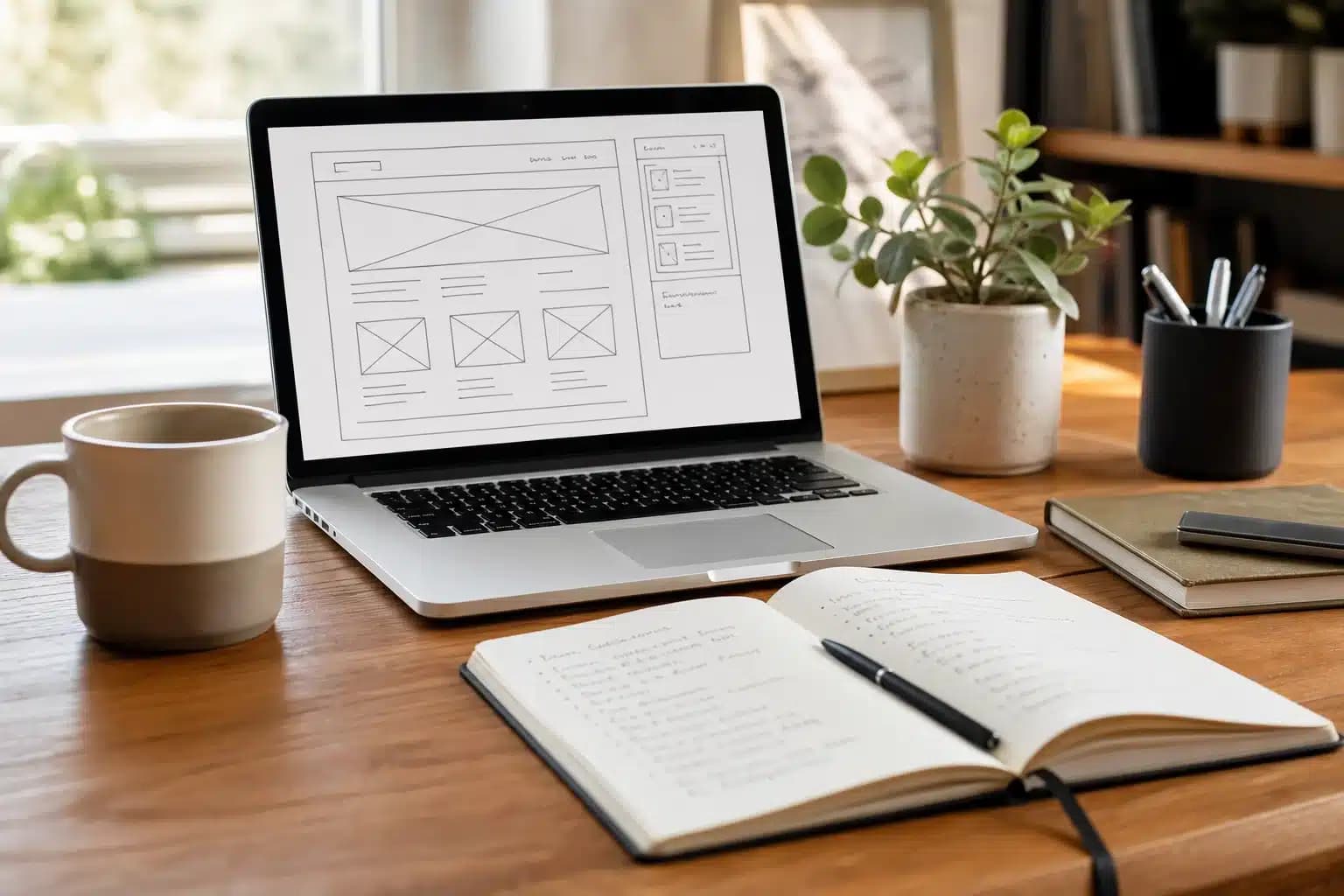
We always appreciate a rough mock-up, even if it still needs quite a bit of shaping technically.
But even then, a good developer should still guide the process honestly.
That means:
- Challenging ideas when necessary
- Avoiding unnecessary complexity
- Designing for your audience rather than personal taste alone
Because while our ideas may sometimes overlap nicely, they are not always aiming towards the same thing.
The Goal Is Clarity, Not Perfection
Ultimately, the early stages of a website project are about clarity, not arriving with a 40-page specification document after six straight hours on Reddit reading about DNS settings.
A good developer should be able to translate the technical side into plain English, explain why certain decisions matter, and stop you disappearing into plugin comparison threads when you could be working on your business development in other areas.
The best websites are not built from perfection.
They are built from:
- Good collaboration
- Thoughtful planning by us
- Clear communication from you
Always basing our next steps on a solid understanding of the people actually using the website.
So if your ideas still feel half-formed?
That's completely fine. That's usually where the best conversations start.